200.000+ Tahun Perjalanan Manusia, dalam 13 Menit
3 min read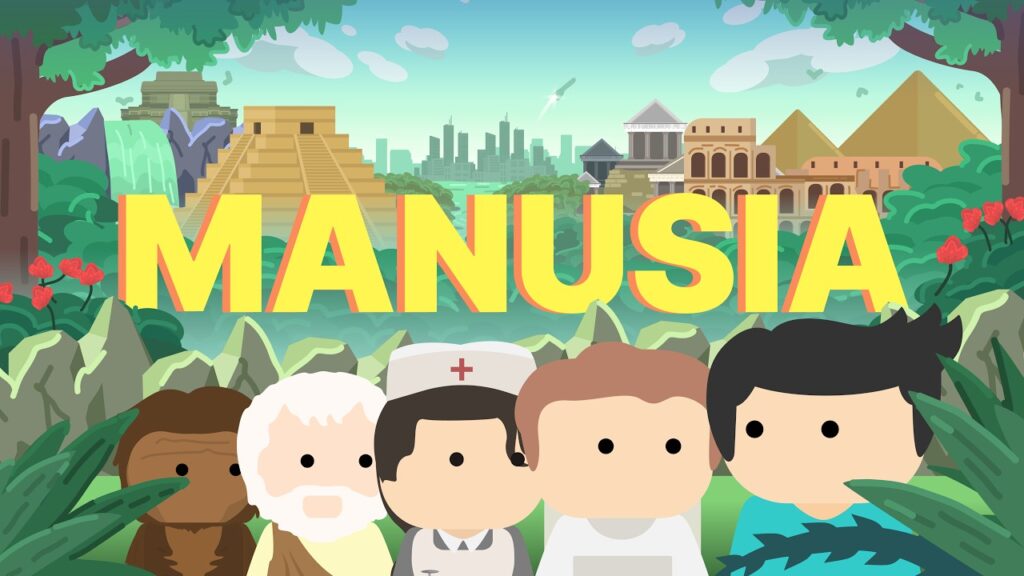
Coba tengok ke luar jendela, sekarang. Mungkin nggak ada hal luar biasa yang kita liat– seakan dunia emang udah kayak gini dari sananya. Ada tanda tanya superbesar yang pastinya muncul di benak kita: gimana ceritanya, kita– spesies manusia– bisa sampai di sini; di sebuah age teramat singkat dengan peradaban yang saking majunya, bikin teknologi keliatan kayak sihir.
Ayo bersiap, karena kita akan berpetualang ke masa lalu– menjelajah ke satu misteri besar peradaban: misteri tentang gimana manusia berevolusi dan memenangkan kompetisi tentang hidup dan mati. Appreciate the video clip!
–.
Tanyakan pertanyaan aneh anda di sini! NGGA ada pertanyaan yang bodoh! ‘Kok Bisa’ ngga cuma sekedar mencoba menjawab pertanyaan-pertanyaan yang terlihat bodoh, aneh dan dungu di sini, tapi juga mencoba menumbuhkan rasa keingintahuan anda terhadap segala hal di dunia ini. Jadi, tunggu apalagi? Ayo subscribe, let’s enjoy the video clips and go curiosity!
–.
FREQUENTLY ASKED QUESTION (Frequently Asked Questions):.
Q: Min, upload tiap hari apa?
A: Tiap hari Rabu dan Sabtu. Tapi kadang-kadang ada video clip yang butuh waktu pembuatan lebih lama. So, stay tuned!
Q: Min, animasinya pake software apa?
A: Adobe After Effects.
Q: MIN, KENAPA DI VIDEONYA ADA BAKSONYA TERUS!?
A: Bakso is ideas * wink.
–.
Follow Kok Bisa.
Site: https://kokbisa.id (artikel mendalam seru tiap 2 minggu).
Dissonance: https://www.kokbisa.id/discord (ngobrol seru sesama pencinta sains).
Instagram: https://instagram.com/kokbisa (infografik baru tiap hari).
TikTok: https://www.tiktok.com/@kokbisachannel (video singkat seru).
Twitter: https://twitter.com/kokbisachannel (diskusi di space tiap 2 minggu).
–.
For business questions: collab@rombak.media.
–.
References:.
Al Jazeera. (2012, December 14). Weight problems kills more people than cravings.
Ashfaq, M., Prosser, S., Nasir, S., Masood, M., Ratnasingham, S., & Hebert, P. D. N. (2015 ). High diversity and fast diversity in the head louse, Pediculus humanus (Pediculidae: Phthiraptera).
British Library. (n.d.).
The development of a human imagination. In Cambridge University Press eBooks (pp. 13– 29).
Handwerk, B. (2021, May 4). Pyramids at Giza. Background. https://www.nationalgeographic.com/history/article/giza-pyramids.
Just how we ended up being human. (n.d.). All-natural History Museum. https://www.nhm.ac.uk/discover/how-we-became-human.html.
McKie, R. (2018, February 14). Why did the Neanderthals die out?
Ossendrijver, M. (2020, July 30). The Moon and Planets in Ancient Mesopotamia. Oxford Research Encyclopedia of Planetary Science. https://oxfordre.com/planetaryscience/view/10.1093/acrefore/9780190647926.001.0001/acrefore-9780190647926-e-198.
Schlein, L. (2014, September 4). More People Die from Suicide Than From Wars, Natural Disasters Combined. VOA. https://www.voanews.com/a/more-people-die-from-suicide-than-from-wars-natural-disasters-combined/2438749.html.
American Forest and Paper Association. (n.d.).
The origin of our types. (n.d.). Nature Museum. https://www.nhm.ac.uk/discover/the-origin-of-our-species.html.
VOA Learning English. Was Life Harder for Neanderthals or Early Humans?
Wayman, E. (2013, November 18). When Did the Human Mind Evolve to What It is Today?
Wei-Haas, M. (2022, January 26). Controversial new research study determines where all contemporary people emerged. Scientific research. https://www.nationalgeographic.com/science/article/controversial-study-pinpoints-birthplace-modern-humans.
Wood, B. (2014, April 2). Human advancement: Fifty years after Homo habilis. Nature. https://www.nature.com/articles/508031a?error=cookies_not_supported&code=74753860-ab48-4554-a12b-6a1bec2307c2.
Zohar, I., Alperson-Afil, N., Goren‐Inbar, N., Prévost, M., Tütken, T., Sisma-Ventura, G., Hershkovitz, I., & Najorka, J. (2022 ). Proof for the cooking of fish 780,000 years back at Gesher Benot Ya’aqov, Israel.
–.
A massive THANK YOU to everyone for enjoying this and for all of your support!
About Author